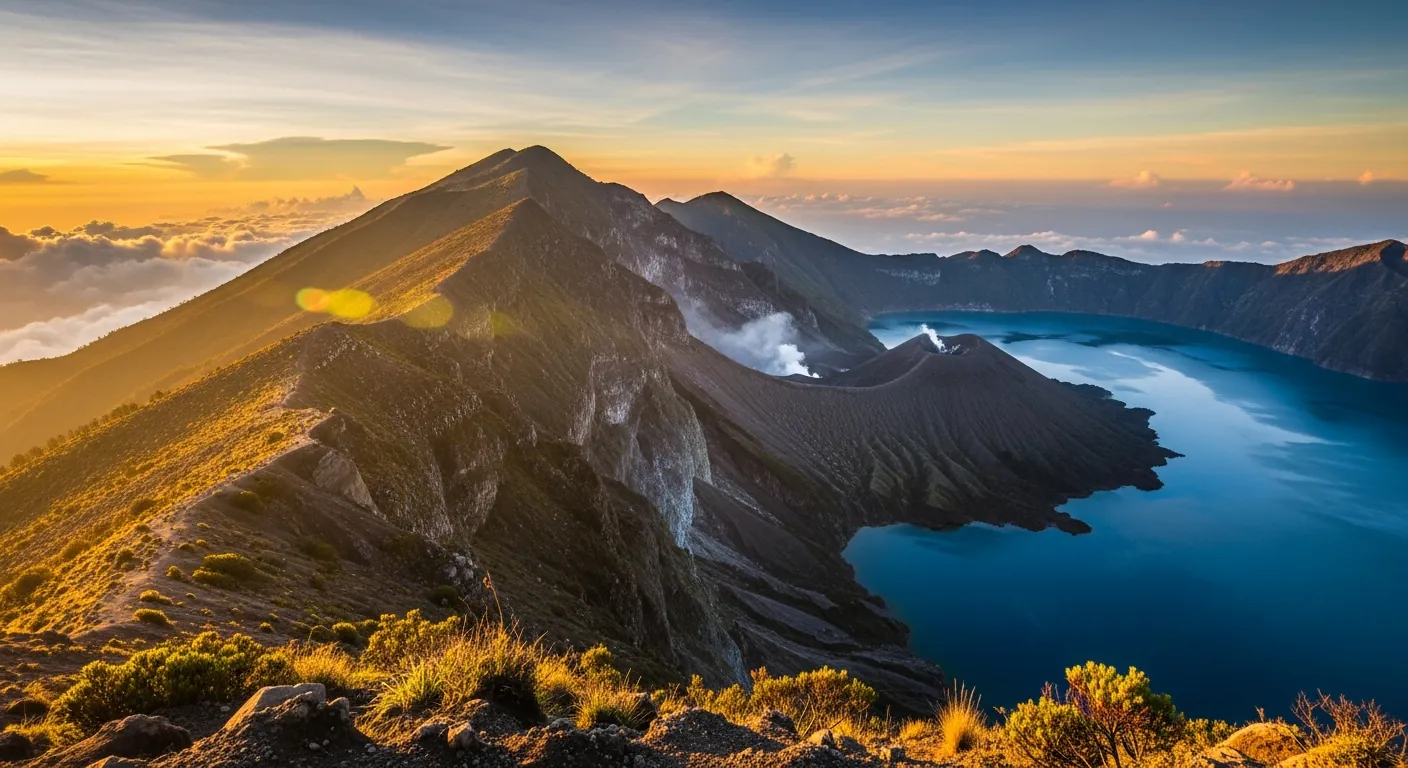
The pre-dawn chill at 2,641 metres, above the tree line, carries the scent of volcanic earth and distant woodsmoke. Below, the lights of Lombok twinkle, a faint counterpoint to the nascent glow illuminating the horizon. This is the Mount Rinjani experience, where every ascent is a deliberate stride into a landscape both ancient and dynamic. The air thins, the views expand, and the geological forces that shaped this island reveal themselves with each new vista.
The Rinjani Luxury Proposition: Refined Ascent and Crater-Rim Comfort
Rinjani luxury defines a premium approach to exploring Mount Rinjani, Lombok’s commanding stratovolcano. This framework prioritizes private guiding, elevated camping standards, and meticulous logistical planning for a discerning international clientele. The peak itself reaches 3,726 metres above sea level, making it the second-highest volcano in Indonesia. Expeditions are designed to mitigate the inherent challenges of high-altitude trekking, offering a supported and comfortable journey through Rinjani National Park. The park encompasses approximately 41,330 hectares, a significant portion of which is accessible via established trekking routes. Unlike standard group treks, the luxury model focuses on personalized service, often including gourmet meal preparation and higher-grade sleeping arrangements at camp. This level of service transforms a challenging summit attempt into a more restorative experience. A Senaru crater-rim trek, for example, is commonly listed as 2 days and 1 night, a concise journey made more comfortable with enhanced amenities. The investment reflects this elevated offering; one deluxe Rinjani package is priced from USD 275 per person, demonstrating the baseline for premium services. These packages typically include all necessary permits, an experienced guide, and a dedicated team of porters to manage equipment. The emphasis remains on a seamless experience from arrival in Lombok to the completion of the trek.
Private Guides and Dedicated Support
Central to the luxury Rinjani trek is the provision of private guides. These individuals possess extensive knowledge of the mountain’s topography, weather patterns, and ecological nuances within Rinjani National Park. Their role extends beyond navigation; they provide interpretive insights into the local culture, geology, and flora. Each trekker or private group receives undivided attention, allowing for flexible pacing and personalized itinerary adjustments based on individual fitness levels and preferences. The support team, typically including porters and a camp chef, handles all logistical aspects, from setting up tents to preparing meals. This allows trekkers to focus entirely on the physical challenge and the surrounding natural beauty. The ratio of staff to trekkers is significantly higher in luxury offerings, ensuring prompt assistance and a responsive support system throughout the journey. This dedicated support is a cornerstone of the premium experience, distinguishing it from more budget-oriented options.
Navigating Mount Rinjani: Routes, Durations, and Logistics
Mount Rinjani’s summit can be accessed primarily via two established routes: Senaru and Sembalun. Each route presents distinct characteristics and varying levels of difficulty. The Senaru route, starting on the western side of the mountain, typically leads trekkers to the crater rim at 2,641 metres, offering views of Segara Anak crater lake. A standard Senaru crater-rim trek is commonly listed as 2 days and 1 night, making it suitable for those with limited time or seeking a less arduous ascent. The Sembalun route, originating from the eastern side, is the most direct path to the summit at 3,726 metres. It involves a longer and steeper ascent, particularly in the final hours before dawn. Planning for a Rinjani trek requires consideration of the Rinjani National Park entrance fee, which contributes to conservation efforts and trail maintenance. This fee is typically integrated into the overall package price for luxury treks. Logistics for these expeditions include pre-trek briefings, equipment checks, and transportation to and from the trailhead. For instance, a comprehensive 4-day 3-night deluxe summit-and-lake package is listed at USD 465 per person, an offering that combines the challenge of the summit with exploration of the Segara Anak crater lake. This package duration allows for a more gradual acclimatization and a deeper engagement with the park’s diverse landscapes.
Glamping at the Crater Rim
Luxury Rinjani treks redefine mountain camping by introducing glamping elements at strategic locations, particularly at the crater rim. Instead of standard dome tents, participants stay in more spacious, often custom-designed tents equipped with comfortable sleeping mats, pillows, and sleeping bags. These setups are designed to offer better insulation against the high-altitude cold and provide a more restful sleep. Portable chairs, tables, and even small solar-powered lighting systems are common amenities, transforming a basic campsite into a comfortable retreat. Meals are prepared by a dedicated camp chef, often incorporating fresh local ingredients and catering to dietary preferences. The objective is to minimize discomfort associated with traditional camping, allowing trekkers to recharge effectively after a day of strenuous hiking. These glamping sites are strategically chosen for their panoramic views, offering exceptional perspectives of the Segara Anak crater lake and the surrounding volcanic landscape. The investment in these enhanced camping facilities is a key differentiator in the luxury Rinjani experience.
The Segara Anak Crater Lake: A Geological Marvel
At an elevation of approximately 2,000 metres within the caldera of Mount Rinjani lies Segara Anak, a striking crescent-shaped crater lake. This sacred body of water, meaning “Child of the Sea” in Sasak, holds significant cultural and spiritual importance for the local communities. The lake’s vibrant turquoise waters contrast sharply with the dark volcanic rock of the caldera walls and the emerging cone of Gunung Barujari, an active post-caldera volcano. Treks often incorporate a descent to the lake’s edge, allowing for closer exploration. Natural hot springs are located near the lake, providing an opportunity for therapeutic soaking after days of trekking. The geology of Segara Anak is a sign of Rinjani’s dynamic volcanic history; the lake formed in the caldera created by a massive eruption in the late 13th century. The sheer scale of the caldera, which measures approximately 6 by 8.5 kilometres, is evident from viewpoints along the crater rim. Mount Rinjani National Park covers about 41,330 hectares, protecting this unique geological feature and its surrounding ecosystems. The presence of the lake and the hot springs adds another dimension to the trekking experience, offering both visual grandeur and opportunities for relaxation.
Lombok Adventure Planning and Mount Rinjani National Park
Beyond the summit trek, Rinjani luxury extends to comprehensive Lombok adventure planning. This includes seamless transfers from Lombok International Airport (LOP) or other points on the island, such as Senggigi or the Gili Islands. Pre- and post-trek accommodation arrangements, often in high-end resorts, are integrated into the overall itinerary. The focus is on creating a holistic travel experience that complements the intensity of the Rinjani ascent. Mount Rinjani National Park itself, established in 1997, is a significant protected area. It encompasses a diverse range of ecosystems, from lowland tropical forests to alpine scrublands. The park is home to various species of flora and fauna, including the Javan langur and several bird species. The park entrance fee, mandatory for all trekkers, contributes directly to the park’s management and conservation initiatives. Luxury operators ensure all permits and fees are handled in advance, eliminating administrative burdens for trekkers. Furthermore, responsible tourism practices are often emphasized, including waste management protocols and supporting local communities through fair wages for guides and porters. Understanding the park’s regulations and ecological sensitivities is an integral part of responsible luxury trekking. For more detailed information, consult authoritative sources such as Wikipedia’s entry on Mount Rinjani or the Mount Rinjani National Park page.
Choosing Your Rinjani Experience: Deluxe vs. Standard
The distinction between deluxe and standard Rinjani treks lies in the level of service, equipment quality, and overall comfort provided. Standard treks typically involve basic camping gear, shared facilities, and a more budget-conscious approach. While still offering access to the mountain, they often lack the personalized attention and enhanced amenities found in luxury options. A deluxe Rinjani package, priced from USD 275 per person, signifies a commitment to superior service. This includes higher-quality tents, more substantial sleeping arrangements, and often a wider selection of meals prepared by a dedicated chef. The guide-to-client ratio is usually lower in deluxe packages, ensuring more individualized support and flexibility. For instance, a 4-day 3-night deluxe summit-and-lake package is listed at USD 465 per person, illustrating the comprehensive nature of these longer, more feature-rich expeditions. These packages are designed for travelers who prioritize comfort, safety, and a seamless experience without compromising the integrity of the mountain adventure. The premium pricing reflects the investment in better equipment, more experienced staff, and a higher standard of logistical execution. For further geographical and historical context, the Wikidata entry for Mount Rinjani offers additional information.
Preparation and Safety Protocols for High-Altitude Trekking
Preparation for a Mount Rinjani trek, particularly a luxury one, involves several key considerations. Physical fitness is paramount; while luxury services enhance comfort, the ascent to 3,726 metres remains a demanding physical challenge. Trekkers should engage in cardiovascular training and strength building in the months leading up to their expedition. Acclimatization is also a factor, particularly for multi-day treks. The 4-day 3-night deluxe summit-and-lake package, for example, provides a more gradual ascent profile than shorter options, aiding in acclimatization. Safety protocols are a cornerstone of luxury operators. This includes comprehensive first-aid kits, emergency communication devices, and guides trained in wilderness first aid. Weather conditions on Mount Rinjani can change rapidly, necessitating appropriate gear, including layers for varying temperatures, waterproof outer shells, and sturdy hiking boots. The Rinjani National Park entrance fee, which supports park infrastructure and emergency services, is an essential component of responsible trekking. Reputable operators provide detailed packing lists and pre-trek briefings to ensure trekkers are adequately prepared for the mountain environment. Understanding the risks associated with high-altitude trekking and adhering to guide instructions are critical for a safe and successful ascent. Additional travel insights can be found on Wikivoyage’s Mount Rinjani guide.
Explore the pinnacle of volcanic trekking with rinjani luxury, where every detail of your Mount Rinjani expedition is meticulously managed. Begin your journey at rinjaniluxury.com.
Understanding the Rinjani Crater-Rim Trek: Practical Planning Detail
The Senaru crater-rim trek, often listed as 2 days and 1 night, represents a core experience for many Mount Rinjani visitors. This route, departing from Senaru village, focuses on reaching the western rim of the caldera, offering stunning views of the crater lake, Segara Anak, and the active cone of Barujari. Trekkers typically ascend through lush rainforest, eventually breaking out into more open terrain. The first night’s camp is strategically positioned right on the crater rim, allowing for exceptional sunset and sunrise spectacles over the vast caldera. This particular trip avoids the full summit push, making it an excellent option for those seeking a significant adventure without the extreme physical demands of the peak.
While a deluxe Rinjani package for this specific route is priced from USD 275 per person, it’s crucial to understand what this transparent pricing includes. Expect professional guides, porters to carry your gear, quality camping equipment, and all meals. The trail itself is well-trodden but challenging, with significant elevation gain from near sea level. Heavy rain can occur, especially during the wet season, transforming parts of the route into muddy ascents. Proper footwear and rain gear are absolute necessities for any trekkers planning this journey. The other side of the crater, particularly the Sembalun route, offers a different starting point and approach, but the Senaru rim remains a popular choice for its initial rainforest experience.
Summiting Rinjani: The 4-Day 3-Night Deluxe Experience
For those aiming for the pinnacle, the 4-day 3-night deluxe summit-and-lake package is the ultimate Rinjani adventure, listed at USD 465 per person. This comprehensive journey typically begins from Sembalun village, providing a more direct, albeit steeper, approach to the summit. The route involves an overnight stay at the crater rim, similar to the shorter trek, but then continues down to the lake itself. Trekkers spend a night by the serene Segara Anak, often enjoying hot springs found along its shores. This extension allows for a deeper appreciation of the caldera’s unique ecosystem, offering views from multiple perspectives.
The summit push itself is a formidable challenge, often starting in the pitch black of early morning. Trekkers begin their climb around 2 AM to reach the 3,726 metres peak for sunrise. It’s a grueling ascent, demanding significant stamina and mental fortitude, as steps forward can feel like sliding back on the scree-covered slopes. Porters are indispensable, ensuring your comfort and safety throughout this arduous hike. Reaching the second-highest volcano in Indonesia is a profound accomplishment, offering an exceptional panorama of Lombok island and beyond. This deluxe package ensures a well-supported trip, maximizing your chances of a successful and memorable climb.
Logistics of Trekking: Mount Rinjani National Park
Mount Rinjani National Park, encompassing approximately 41,330 hectares, forms the protected natural habitat surrounding this iconic volcano. This vast area is meticulously managed to preserve its biodiversity and ensure sustainable trekking practices. All trekkers entering the park must register, and permits are part of the transparent pricing structure of reputable tour operators. The park’s regulations are designed to protect both the environment and the safety of visitors. Understanding the scale of the park helps appreciate the commitment required for multi-day treks, as you’re not just climbing a mountain, but traversing a significant ecological zone.
Access to the park is primarily via two main gateways: Senaru village on the northern side and Sembalun village on the eastern side. Each village offers a distinct starting point and initial trail experience. Senaru is known for its lush, humid rainforest paths, while Sembalun presents more open grasslands in its lower sections. The choice of route significantly impacts the journey’s character. Heavy rain can impact trail conditions, sometimes leading to temporary closures for safety reasons. Always check weather forecasts and park advisories before your trip. The park’s infrastructure, though basic in places, is crucial for supporting the numerous porters and guides who facilitate these adventures, allowing trekkers to focus on the challenge and beauty of the climb.
Altitude and Acclimatization: Preparing for the Climb
Mount Rinjani reaches 3,726 metres above sea level, making altitude a significant factor in any trek, especially for those aiming for the summit. While not extreme high altitude, the rapid ascent can affect trekkers unaccustomed to such elevations. Starting near sea level in Lombok, your body experiences substantial changes over just 2 days or 4 days. Proper acclimatization, even if informal, is beneficial. Staying hydrated is critical throughout the hike. Many trekkers find the final summit push, starting in the pitch black, particularly challenging due to the altitude combined with fatigue.
Symptoms of altitude sickness can range from mild headaches and nausea to more severe conditions. Reputable tour operators and their guides are trained to monitor trekkers for these signs. Choosing a 4-day 3-night package over a shorter one offers a slightly more gradual ascent, indirectly aiding acclimatization by spreading the effort over more nights. The presence of experienced porters and guides ensures that help is readily available. Understanding your own physical limits and communicating any discomfort is vital. While the top-tier views from the crater and summit are immense rewards, respecting the mountain’s elevation is paramount for a safe and enjoyable trip.
The Role of Porters: Essential Support for Your Journey
Porters are the unsung heroes of any Mount Rinjani trek, particularly for deluxe packages. They carry the vast majority of equipment, including tents, sleeping bags, cooking gear, and food, making the demanding journey possible for trekkers. Without their incredible strength and local knowledge, the comprehensive comfort provided by a deluxe Rinjani package, priced from USD 275 per person for 2 days or USD 465 for 4 days, would be unachievable. Their dedication allows trekkers to focus on the hike itself, carrying only a daypack with personal essentials.
These local experts are not just carriers; they possess intimate knowledge of the trail, weather patterns, and the surrounding environment of Mount Rinjani National Park. They navigate the steep ascents and descents, even in heavy rain, with remarkable agility. Their support is invaluable, especially during the challenging summit climb in the pitch black. Acknowledging their hard work and contributing to their well-being through fair wages and tips is an important aspect of a responsible and ethical adventure. They are integral to the success and enjoyment of every trip, ensuring you reach the crater, lake, or summit safely and comfortably.
Choosing Your Route: Senaru vs. Sembalun – Practical Planning Detail
Deciding between starting your Mount Rinjani journey from Senaru village or Sembalun village is a key practical planning detail, as each offers a distinct experience. The Senaru route, commonly used for the 2-day 1-night crater-rim trek, is known for its initial passage through dense, humid rainforest. This provides welcome shade and a unique ecological experience before emerging onto more open slopes. The ascent is generally considered less steep in the lower sections compared to Sembalun, but it still requires significant effort to reach the crater rim.
Conversely, the Sembalun route is the most common starting point for those aiming for the 3,726 metres summit, often part of the 4-day 3-night deluxe package. This route begins in more open grassland and savannah, offering expansive views from the outset, though with less immediate shade. The climb from Sembalun to the crater rim is often described as more consistently steep, making for a challenging hike. Both routes eventually converge at the crater rim, but their initial characteristics significantly shape the journey. Understanding these differences allows trekkers to select the route that best aligns with their fitness level, time availability, and desired adventure, maximizing their enjoyment of this top-tier climb.